Posts

How to Take Care Your Baby Plantlings !!!
Image
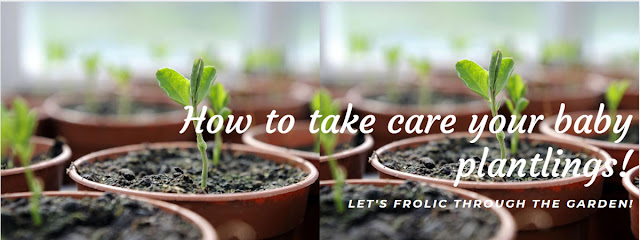
Gardening naturally supplies a good looking range of natural and organic crop coverage and enabling the gardeners to grow fruit and vegetables without pesticides. The gardening features a number of various kinds of netting to forestall nearly any garden pest destroying our harvests. Bird netting, cabbage white butterfly netting, insect mesh netting to call but a couple of. There are lawn hoops and fruit and vegetable cages for the netting if we required for the trees. There are organic and natural answers for pest to keep an eye on, the favorite being nematodes for cover towards slugs, vine weevil, leather jackets, ants, chafer grub plus the combination for fruit and vegetable growers. Caring for Baby Plantlings Plantlings are living plants that might be in a position to plant and able to nurture. When they have got already sprouted and evolved a strong and healthy root machine we have to provide additional nurturing and a focus a...
How to Make Vermicompost Tea

Image
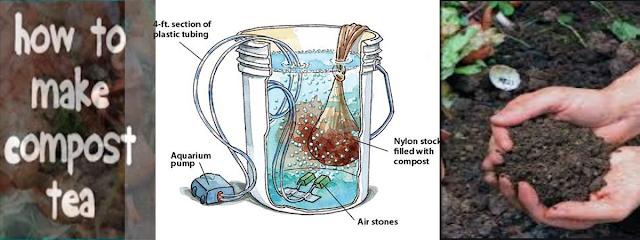
Vermicompost Tea It's simple to make nutrient-rich, liquid fertilizer from your worms' castings. Worm tea may be used as a liquid fertilizer (poured onto the soil), carried out by way of spraying the leaves of the plant, or each. If you select to spray the leaves, achieve this in the morning when plants are most receptive to this type of feeding. If you apply worm tea, when you water, the nutrients go down into the soil to the roots of your vegetation where they are readily absorbed. Do not store the tea in a closed container it might blow the lid off. If you've got set up a worm bin, optimistically, you will have been rewarded with a fantastic crop of vermicompost or vermicastings. For the time being, the variations between the 2 captions are: VermiCompost: Vermicompost (vermi-compost, vermiculture) is made from the decomposition procedure of various species of worms, usually red wigglers, white worms, and different earthworms, to generate a mixture of de...

EARTHWORMS - A GOOD friend to your GARDEN?

Image
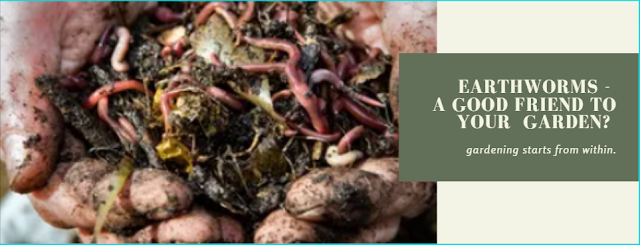
EARTHWORMS - A GOOD friend to your  GARDEN?  The purpose of creating a Worm-Friendly Garden Worms help extend the volume of air and water that gets into the soil. They disintegrate the natural subjects, like leaves and grass, into issues that plants can use. When they devour, they leave behind castings which can be an extremely valuable type of fertilizer. Earthworms are like free farm assistants. YES! Worms will also be very beneficial to our garden. Nutrient-dense, rich garden soil is crucial to a hit vegetable garden. Healthy soil would possibly include a variety of underground animal & plant activities, such as earthworms and fungi. Worms do not have problems building up the standard of your soil and are interested in decaying matter, while they eat bacteria and nematodes. They also excrete worm castings, which are farmers' GOLD , or principally one of the perfect soil amendments you'll be able to find! Worm castings are mixed with rich nutrients and mineral...

Flower Gardening -When to Water

Image
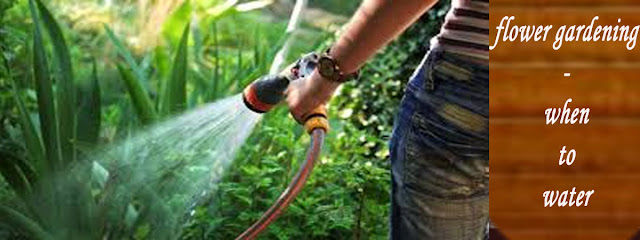
How to water plants? It's all about paying attention ,giving love and care By reading, working on the plants we will be able to know how to water a plant properly, which ensures the health and vitality of the plants. But we should find the best suitable time periods to water each plant according to its necessity. When it comes to watering, there are no tough or speedy rules. It's an opinion that is dependent upon the kind of plant, the soil, the weather, the time of yr and numerous other variables. Fortunately, it is easy to resolve what to do — even for a teen on a scorching summer day. you just wish to take a look at the soil. Before watering you should check the soil by inserting your forefinger into the soil. Over time, you get to know how heavy a pot must feel if the soil throughout the pot is thoroughly moistened. If it's not heavy sufficient, you water slowly till the entire soil in the pot is wet and water runs out the bottom. Then you lift the pot all o...

deep in the Garden: CARNIVOROUS PLANTS

Image
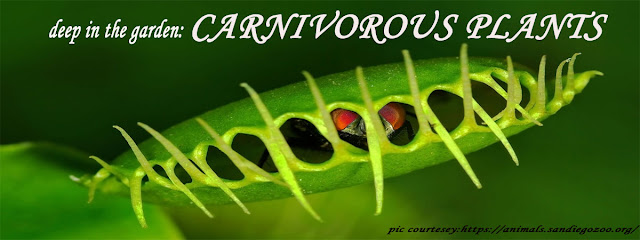
One of my favourite thing is to explore and roaming around with the plants to locate all the enchanting varieties growing throughout the sphere. Over the years, I have come across some lovely distinctive stuff—but few things seize our observation like the wonderful queerness of carnivorous plants/wild plants. Now the trend has changed of keeping these Carnivorous plants as indoor plants/domestic plants with undue care. Carnivorous plant, sometimes called insectivorous plant, any plant particularly tailored for shooting and digesting insects and different small bugs and animals by the use of creative pitfalls and traps. Carnivory in plants has evolved independently about six instances across several families and orders. The more than 600 known species of carnivorous plants represent an excessively diverse team, in some instances having little extra in not unusual than their carnivorous addiction. While they still use photosynthesis like their green brothers and sisters, carnivor...

Best Soil for the Plants Growth!!!

Image
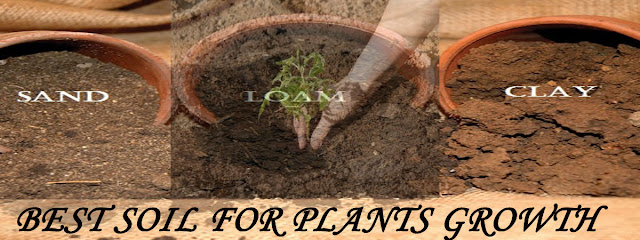
There are three major classes of soil: SAND, SILT, and CLAY. The best soil for many plants to ensure optimal enlargement is a rich, sandy loam. This soil is an excellent mix of all three main forms of soil. In most circumstances, you'll be able to wish to amend the soil with compost. Depending on how compact the soil is, you may need to mix peat moss and sand. However, there are lots of plants that are well tailored and can develop particularly varieties of soil. Different Plants for Different Soils Soil is generally described through the volume of sand, clay, and silt it contains. This is referred to as texture. Soil texture is immediately related to nutrient high quality and drainage functions. A loam soil incorporates a pleasant balance of silt, sand, and clay together with humus. The elements that make this soil kind so desirable and good for rising plants include: • Higher pH level: The perfect pH for most crops are between 6.0 and 7.0. The pH degree impacts the...

Plants that grow with less sunlight

Image
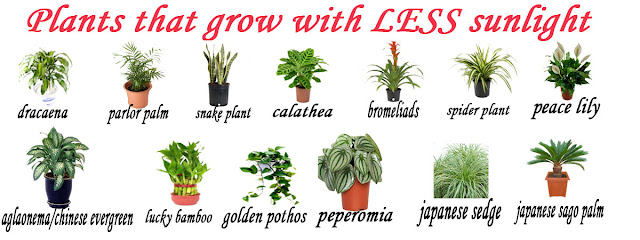
Some plants exist in very low-light prerequisites. If you think about darkest, rainforest canopies, there are plants that grow in that atmosphere. They have evolutionary adaptations to maintain those low-light environments, which include making broad, thin leaves to capture as a lot of daylight as they may be able to. Plants using photosynthesis absorbs carbon dioxide from the air, receives water from the roots, and use sunlight because the energetic supply to create sugar from water and carbon dioxide. But. Fundamentally if a plant is green, it requires sunlight to grow. Otherwise, it can’t continue to exist. Have a space in your home that lacks daylight? Check out our information on different plants that develop without sunlight. It’s true that every plant want no less than some mild, you’d be amazed at how many plants can flourish below indirect gentle or fluorescent lighting. In this information, I’m going to turn you some of my favourite plants that can develop withou...